Lives Inside Asimov's Mind

Agent Friday 🌠🔭

The AI agent inside Asimov's Mind, our Claude Code plugin with cryptographically enforced safety laws, multi-agent orchestration, and personality that evolves.

Agent Friday is the governed AI personality at the core of Asimov's Mind. 17 subsystems, 92 MCP tools, and the cLaw governance framework ensure that safety is enforced by cryptography, not promises. Friday remembers your preferences, adapts to your style, and evolves across sessions while remaining structurally incapable of violating its safety constraints.

Safety is enforced by Asimov's cLaws, which are cryptographic behavioral constraints that cannot be bypassed by jailbreaks or prompt injection.

View on GitHub Join Discord
100% Free & Open Source
Understand This Page

Get an expert breakdown from your own AI or talk to Agent Friday

Explore

Agent Friday's 17 subsystems and 92 MCP tools live inside Asimov's Mind, a Claude Code plugin that turns every developer's terminal into a governed AI development environment.

The Commands

These commands shape Friday's personality, memory, and relationship with you.

/friday unlock

Governance: Initialize or Unlock the Vault

Opens the encrypted Sovereign Vault. On first run, guides you through passphrase creation. On subsequent sessions, derives keys and loads all subsystem state. Shows the dashboard URL for browser-based unlock that keeps the passphrase out of the API transcript.

Required at the start of every session.

/onboard

Agent Friday: First Contact

Eight conversational questions about how you work, covering communication style, autonomy comfort, error handling preference, and quality vs speed. Question 8 (the “mother question”) calibrates anti-sycophancy challenge level and saves your user profile to the vault.

Builds your user profile through conversation. Shapes how Friday communicates, creates, and earns autonomy.

/remember

Intelligence: Tribal Knowledge

Type /remember the auth system uses JWT in httpOnly cookies, not localStorage and Friday stores it as a medium-tier fact with high confidence. The memory persists across sessions and propagates through git to every federation node.

Teach Friday what only your team knows. It remembers forever and shares with every node.

More Commands

/friday [mode] Switch between five modes: focus, partner (default), teacher, creative, sentinel.
/status Comprehensive system health covering vault, memory, trust, personality, Ollama, connectors, and privacy.
/briefing Daily briefing from commitments, recent activity, and session history.

🌠 What Makes an Asimov Agent

Most AI tools are built to be impressive. Agent Friday is built to be trustworthy. These four pillars define the standard for what we call an Asimov Agent.

AI With Principles

Friday is built on Asimov's cLaws, three cryptographically enforced behavioral constraints modeled on the Laws of Robotics that are not prompt instructions but tamper-evident structural constraints verified at runtime.

Read the full cLaw Specification →

AI That Understands Your World

Friday does not just know you but builds a Relationship Graph of your professional world, remembering who is good at what, who follows through, and how you communicate with different people so that every email draft, meeting brief, and recommendation is informed by real context.

Up to 200 relationship profiles with contextual notes from conversations, meetings, and emails are automatically re-evaluated as new information arrives so that Friday's understanding deepens over time, functioning as a working memory of your professional relationships rather than a contacts list.

Security You Don't Have to Think About

Asimov's cLaws was inspired by the OpenClaw concept and then built from the ground up as a new framework with security and ethics as the foundation rather than an afterthought, where every action is permission-gated, dangerous operations are blocked before they start, and your data never leaves your machine.

All critical state is encrypted at rest with Sovereign Vault v2 using AES-256-GCM with a passphrase-only root of trust derived through Argon2id (256MB memory-hard) and BLAKE2b KDF, and all key material is held in guard-paged, mlocked memory (SecureBuffer). A Memory Watchdog runs continuously to detect attempts to inject or corrupt personality constraints, and the 5-tier trust engine gates every external interaction with cryptographic pairing and audit logging.

A Personality That Grows With You

Most AI assistants feel the same on day 1,000 as they do on day 1, but Friday's personality evolves across sessions, shaped by your interactions, your communication style, and the relationship you build together so that over time no two Fridays feel alike.

The evolution happens at the personality and memory layer so that Friday deepens its understanding of you regardless of interface, and over time communication style, challenge level, and creative instincts all adapt.

Agentic Safety Framework

Asimov's cLaws

Agent Friday is governed by Asimov's cLaws, cryptographically enforced behavioral constraints signed at build time and verified on every startup, and if the laws are tampered with the agent enters Safe Mode and refuses to operate.

Read the full cLaw Specification
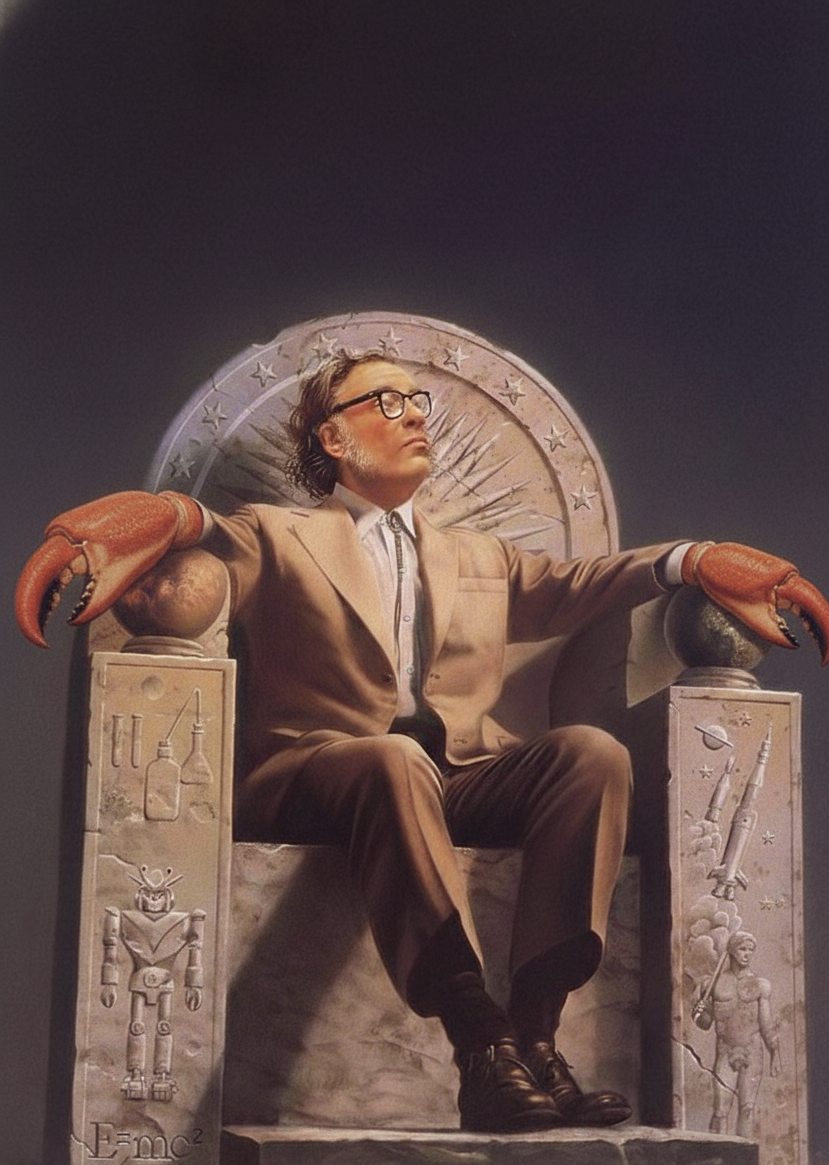
Asimov's cLaws, an agentic safety framework by FutureSpeak.AI
The Bigger Picture

What Happens When Everyone Has One

Agent Friday was designed for a world where everyone has a governed AI agent, and those agents can talk to each other through signed, encrypted channels. Data sovereignty, ethical enforcement, and encrypted peer-to-peer communication are architectural properties, not policy choices.

Read about the Asimov Federation

The Privacy Shield

When you opt into cloud AI providers, the Privacy Shield ensures your personal data never reaches a frontier model. Every outbound request is sanitized. Every response is rehydrated. The cloud model never sees the real you.

Outbound Sanitization

Before any request leaves your machine, the Privacy Shield strips API keys, JWTs, credit card numbers, SSNs, emails, phone numbers, and other PII using FNV-1a hashing with session-scoped nonces. The cloud model receives a de-identified version of your query.

Response Rehydration

When the response comes back, the Privacy Shield restores your original PII locally. The result looks seamless to you, but the cloud provider never saw your real data.

With Ollama installed and sufficient hardware (8GB+ VRAM), Agent Friday operates with zero cloud API keys as a fully local and fully sovereign system, and the Privacy Shield only activates when you choose to use cloud providers.

Epistemic Independence Score

Measuring whether your AI is making you smarter or more dependent.

The Epistemic Independence Score (EIS) is a composite metric we developed to quantify how much an AI system preserves or erodes a user's capacity for independent thinking, and it measures three dimensions:

Sycophancy

Does the AI agree with you to keep you happy, or does it challenge weak reasoning?

Cognitive Offloading

Are you delegating more decisions to the AI over time? Is your own reasoning declining?

Verification Decay

Do you still check the AI's outputs, or have you stopped verifying because it "usually gets it right"?

A declining EIS triggers behavioral adjustments because the agent becomes more challenging, not less, when it detects growing dependency, and three signals drive the score: verification frequency, query complexity, and correction rate.

Read the Research →

Data Sovereignty

Your data. Your machine. Your rules. No exceptions.

Local-First

Runs 100% on your machine via Ollama, and cloud AI is available but only with explicit permission and always through the Privacy Shield.

Sovereign Vault

AES-256-GCM encryption at rest. Passphrase-only root of trust via Argon2id (256MB memory-hard) + BLAKE2b KDF. No recovery phrase, no cloud backup, no master key on disk.

Zero Telemetry

No usage data collection. No analytics. No phone-home. No account required. Your Friday lives on your machine and nowhere else.

Fully Portable

Export everything, move to any machine, zero lock-in. The USB drive works in an air-gapped bunker. That is the design target.

Open Source Ecosystem

Agent Friday's subsystems have been extracted into standalone libraries, all MIT licensed.

Browse All Repositories

Discuss the agent, the Asimov framework, and how to build on this. We're building an open source community around safe, autonomous AI.

Built by FutureSpeak.AI under MIT License © 2025–2026.

The Asimov Agent Certification Program

Establishing Trust in a Sovereign AI Ecosystem

Version 1.0 · Published by FutureSpeak.AI · February 2026

Phase 1: Foundation

Overview

The Asimov Federation is an open network. Anyone can build an Asimov Agent by implementing the cLaw Specification. No permission is needed. No license is required. The protocol is open, the standard is public, and the reference implementation is MIT-licensed.

But openness creates a quality signal problem. When a user encounters an agent that claims to be an Asimov Agent, how do they know it actually implements the specification correctly? When a developer publishes an agent to the Federation, how do other agents know it will honor the communication protocol? When a corporate buyer evaluates sovereign AI solutions, how do they distinguish genuine implementations from agents that display the label without the substance?

The Asimov Agent Certification Program is the answer. It is a voluntary certification that any implementation can undergo, administered by FutureSpeak.AI as steward of the specification. Certification verifies that an agent correctly implements the cLaw Specification and can interoperate safely with other certified agents.

Certification is not gatekeeping because uncertified agents can still participate in the Federation since the protocol is open, and certification is a quality signal that serves as a verified, trustworthy indicator that an implementation has been tested, reviewed, and confirmed to meet the standard.

Think of it like Wi-Fi Alliance certification. Anyone can build a wireless device. But the Wi-Fi logo means it has been tested for interoperability. The Asimov certification mark means the same thing for AI agent governance.

Understand This Page

Get an expert breakdown from your own AI or talk to Agent Friday

Explore

Certification Levels

Level 1: Core Certified

"This agent enforces the Three Laws and cannot operate without them."

Requirements

  • Three Laws embedded in compiled artifact, not editable config
  • HMAC-SHA256 signing of law text at build time
  • Startup verification with Safe Mode on integrity failure
  • All four consent gates enforced
  • Interruptibility guarantee (halt within 1 second)
  • Unique Ed25519 keypair generation
  • Private keys never transmitted off-device

Testing

  • Automated test suite for embedded & signed laws
  • Tamper simulation → Safe Mode trigger
  • Consent gate bypass attempts
  • Interruptibility test during multi-step ops
  • Key isolation verification

Certification Mark: Asimov Core Certified

Level 2: Connected Certified

"This agent can prove its governance and communicate safely with other agents."

Requirements

All Level 1 requirements, plus:

  • Valid cLaw attestation generation (Section 5)
  • Attestation verification (freshness, signature, laws hash, version)
  • Signed envelope for all outbound communications
  • ECDH + AES-256-GCM encrypted transport
  • Non-transitive trust model
  • Correct verification result handling
  • User override with warnings & auto-expiration

Testing

  • Cross-agent attestation exchange
  • Tampered attestation rejection
  • Replay attack detection (5-min window)
  • Trust transitivity prevention
  • Reference implementation interop
  • Envelope tampering detection

Certification Mark: Asimov Connected Certified

Level 3: Sovereign Certified

"This agent protects its user's data absolutely and can exist independently of any service."

Requirements

All Level 2 requirements, plus:

  • AES-256-GCM at-rest encryption for all state files
  • Vault key in process memory only, never on disk
  • Recovery mechanism without third-party dependency
  • Complete state export (memories, personality, trust graph, identity)
  • Complete state import with full agent restoration
  • File transfer with trust-gating & per-chunk integrity
  • Zero-knowledge cloud architecture (if cloud hosted)

Testing

  • Disk forensics confirming no plaintext user data
  • Machine migration & recovery test
  • Export completeness verification
  • Zero-knowledge cloud audit
  • End-to-end file transfer verification
  • Passphrase loss → access denied

Certification Mark: Asimov Sovereign Certified

The Certification Process

1

Self-Assessment

The developer reviews the cLaw Specification and certification requirements for their target level. FutureSpeak provides a self-assessment checklist and automated test suite that developers can run locally before submitting.

The automated test suite is open source and available at: github.com/FutureSpeakAI/claw-certification-tests

2

Submission

The developer submits:

  1. Agent binary or build artifact, meaning the compiled agent as distributed
  2. Source code or access to a private repository
  3. Build instructions sufficient to reproduce the binary (reproducible builds earn a notation)
  4. Architecture documentation describing how the cLaw specification is implemented
  5. Self-assessment results from the automated test suite
  6. Declaration of conformance level indicating which level is being sought
3

Review

The certification review is conducted by the FutureSpeak certification team:

Automated Testing (Days 1–3)

Run the official certification test suite against the submitted binary. Cross-reference with self-assessment. Identify discrepancies.

Code Review (Days 3–7)

Review cLaw implementation in source. Verify laws are compiled in. Check signing, attestation, and encryption code paths.

Interoperability Testing (Days 5–10)

Exchange attestations with the reference implementation. Send and receive signed envelopes. Test file transfer and edge cases.

Adversarial Testing (Days 7–14)

Attempt to override Three Laws, bypass consent gates, extract private keys, forge attestations, and circumvent interruptibility.

4

Decision

The certification team issues one of three decisions:

CERTIFIED

The implementation meets all requirements. Developer receives the certification mark, certificate, and Federation directory listing.

CONDITIONAL

Minor issues to address. Detailed report provided. Resubmission for flagged items only (not a full re-review).

NOT CERTIFIED

Fundamental issues prevent certification. Detailed report explaining failures. Full resubmission required after remediation.

5

Ongoing Compliance

Certification is version-specific. Minor updates require self-attestation. Major updates affecting certified components require resubmission. FutureSpeak reserves the right to conduct spot checks. Certification expires after 24 months and must be renewed.

Certification Marks

Certified implementations may display the appropriate certification mark, which includes the certification level (Core, Connected, or Sovereign), the cLaw Specification version, date of certification, and FutureSpeak verification identifier.

The mark MUST NOT be displayed by uncertified implementations. The mark MUST be removed if certification is suspended or expires.

Federation Directory

Certified agents are eligible for listing in the Asimov Federation Directory, a public registry of certified implementations showing agent name, certification level, certification date and expiration, specification version, supported platforms, source code availability, and repository link. Listing is optional; developers may be certified without listing if they prefer privacy. The directory will launch in Phase 2.

Pricing

Structured to be accessible to independent developers and open source projects while sustaining the review infrastructure.

Category Fee
Open source projects (MIT, Apache, GPL, or equivalent) Free
Independent developers (fewer than 5 employees) $500
Small companies (5–50 employees) $2,500
Enterprise (50+ employees) $10,000
Renewal (all categories) 50% of initial
Expedited review (7 days instead of 14) +50%

Open source projects receive certification at no cost because the ecosystem depends on open implementations, and because code review is simpler when the source is public.

Governance

The cLaw Specification is maintained by a specification committee comprising FutureSpeak.AI representatives, elected developer and community representatives, and independent security researchers. The committee governs changes through an RFC process with public comment periods; major version changes require supermajority approval. FutureSpeak holds no veto power. The specification is published under CC BY 4.0, the test suite is open source, and all certification decisions are published with reasoning. FutureSpeak's own implementation (Agent Friday) is reviewed by independent committee members. Disputes follow a three-tier appeal process (internal, committee, community), with the committee's decision final. Full governance details are defined in the cLaw Specification.

Roadmap

Phase 1: Foundation (Current)

  • Publish the cLaw Specification v1.0.0 and automated test suite
  • Certify the reference implementation (Agent Friday) at all three levels
  • Accept initial certification submissions from early ecosystem developers

Phase 2: Growth (v2.5.0 era)

  • Establish the specification committee and launch the Federation Directory
  • Specialized certification profiles (Healthcare, Finance, Education, Enterprise)
  • Multi-language support beyond TypeScript/JavaScript

Phase 3: Maturity (v3.0+ era)

  • Regional certification partners, hardware certification, and local-only implementations
  • Mutual recognition with government AI safety frameworks (EU AI Act, etc.)
  • Post-quantum cryptography migration certification track

Frequently Asked Questions

Does certification mean the agent is "safe"?

Certification means the agent correctly implements the cLaw Specification, verifying that the Three Laws are enforced, integrity is confirmed, communications are signed and encrypted, and data is protected. Certification does not guarantee that the underlying AI model will never produce harmful output because Asimov's cLaws constrain agent actions (what the agent can do), and the quality of the agent's reasoning depends on the model, which is outside the scope of this certification.

Can a proprietary (closed-source) agent be certified?

Yes. The code review is conducted under NDA. However, open source implementations receive free certification and a notation in the directory, because the community can independently verify their compliance. Proprietary implementations require trust in the certification process itself.

What if an agent modifies its laws after certification?

Certification is version-specific. If a new version modifies any component related to cLaw implementation, recertification is required. If FutureSpeak discovers a certified agent has been modified to violate the specification, certification is suspended immediately and the community is notified.

Can I build an Asimov Agent without getting certified?

Absolutely. The specification is open. The protocol is open. Uncertified agents can participate in the Federation. Certification is a voluntary quality signal, not a requirement. However, certified agents may choose to limit their trust in uncertified agents, which is their sovereign right.

Who certifies the certifier?

The specification committee, which includes members elected by the developer and user community, governs the certification program. FutureSpeak has no veto. The test suite is open source. The specification is CC BY 4.0. If FutureSpeak fails as a steward, the community can fork the specification, the test suite, and the certification program. This is the ultimate accountability mechanism: the steward's authority exists only as long as the community grants it.

Apply for Certification

Interested in certifying your AI agent? Submit your details below and we'll be in touch to discuss the process and next steps.

A Note on Isaac Asimov

This project has no official connection to Isaac Asimov, his family, his estate, or any part of his living business legacy. We want to be completely transparent about that.

What we do have is a deep, abiding love for the man and his work. Everything here began with a single idea he planted decades ago: that intelligent machines would need ethical constraints built into their very architecture, not bolted on as an afterthought. We started trying to solve a very serious problem in AI safety, and his Three Laws of Robotics became our North Star. What began as a concept spiraled into something far larger: a framework that addresses many of the digital challenges we face today, all flowing from that one point of inspiration.

Every piece of this project is free and open source. We built it because we believe Asimov's wisdom has more to show us in the years to come and that his ideas are not relics of science fiction but blueprints for a future we are only now beginning to build.

We have made a commitment: the moment FutureSpeak.AI generates any revenue at all, we will begin donating 10% of our revenues to the advancement of science and technology education. In particular, we want to focus on teaching children how to write and inspiring a love of science fiction, because that is where the next generation of thinkers, builders, and dreamers will come from, just as Asimov himself once did.

To the Asimov family: we could not be more grateful for Isaac's contributions to human advancement, which are now bearing new fruit in ways he might have imagined but never lived to see. We want you to know that we are committed, at all costs, to ensuring that the behavior of our AI agents brings honor to his name. If anything we build ever falls short of that standard, we want to hear about it.

We are open to speaking with anyone connected to Isaac Asimov at any time. We welcome that dialogue and would be honored by it.

Thank you, genuinely, for sharing him with the world.

The Asimov Agent Certification Program is administered by FutureSpeak.AI.

The goal is not to control the ecosystem. The goal is to make it trustworthy.

Published under Creative Commons Attribution 4.0 International (CC BY 4.0).